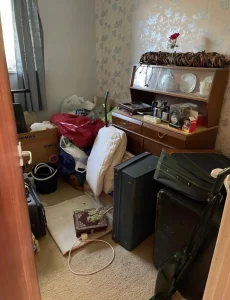
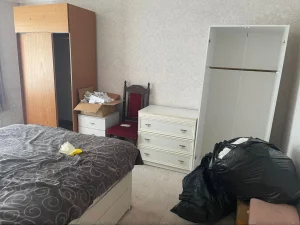
What’s Involved in a House Clearance Quote?
One of the first questions most people ask when arranging a house clearance is simple:
“How much is it going to cost?”
It is completely understandable. Whether you are clearing a family home, preparing a property for sale, dealing with a probate clearance or simply trying to remove years of accumulated belongings, you need to know what the job is likely to cost before you make a decision.
The honest answer is that there is no such thing as a one-price-fits-all house clearance quote.
Every property is different. A small flat with easy access and a few bulky items is very different from a large house, loft, garage, shed and garden clearance with restricted access, specialist disposal items and several tonnes of waste. That is why a professional clearance company will usually ask for detailed photos, a description of the property and, for medium to large clearances, may recommend viewing the property in person before confirming a fixed price.
At Clear A Space, we work this way because we want your quote to be realistic, transparent and properly explained from the start. Our aim is to give customers a clear understanding of what is included, what affects the cost and why some clearances are more complex than others.
What affects the cost of a house Clearance Quote?
A house clearance quote is usually based on several practical factors. These include the labour required, the amount of material being removed, the type of items involved, disposal costs, access to the property and VAT.
The main things that affect the price are:
- how long the clearance is likely to take
- how many team members are needed
- the size of the property
- the volume of items to be removed
- the estimated weight of items going for recycling or disposal
- the number of specialist disposal items
- access to the property
- parking distance from the property
- stairs, lifts, narrow entrances or long carrying distances
- whether lofts, garages, sheds or gardens are included
- whether carpets, fixtures or fittings need removing
- whether a deep clean is required afterwards
- VAT at the standard rate, where applicable
Waste weight is especially important because commercial waste sites generally charge by weight. That means a property containing heavy furniture, books, rubble, timber, appliances or dense mixed waste may cost more to clear than a property with the same visible volume of lighter items.
Time is also a major factor. A team of two may be enough for a smaller clearance, while larger properties may require a bigger team or more time on site. A professional quote needs to allow for sorting, lifting, loading, transport, recycling, disposal and leaving the property tidy afterwards.
Why photos or a property viewing are usually needed
In almost all cases, a house clearance company will ask for photos of the areas that need clearing. This is not to make the process difficult. It is to make the quote more accurate.
Photos help the clearance team estimate:
- how much needs to be removed
- the likely weight of the items
- whether specialist disposal items are present
- how many people are needed
- how long the job may take
- whether access could affect the clearance
- whether a viewing is needed before confirming the quote
For small clearances, detailed photos and a clear description may be enough to provide a quote. For medium to large clearances, or properties with lofts, outbuildings, garages, sheds, large amounts of furniture or restricted access, a viewing is often the best option.
A viewing allows the company to see exactly what is required, answer any questions you may have and provide a more accurate fixed quote.
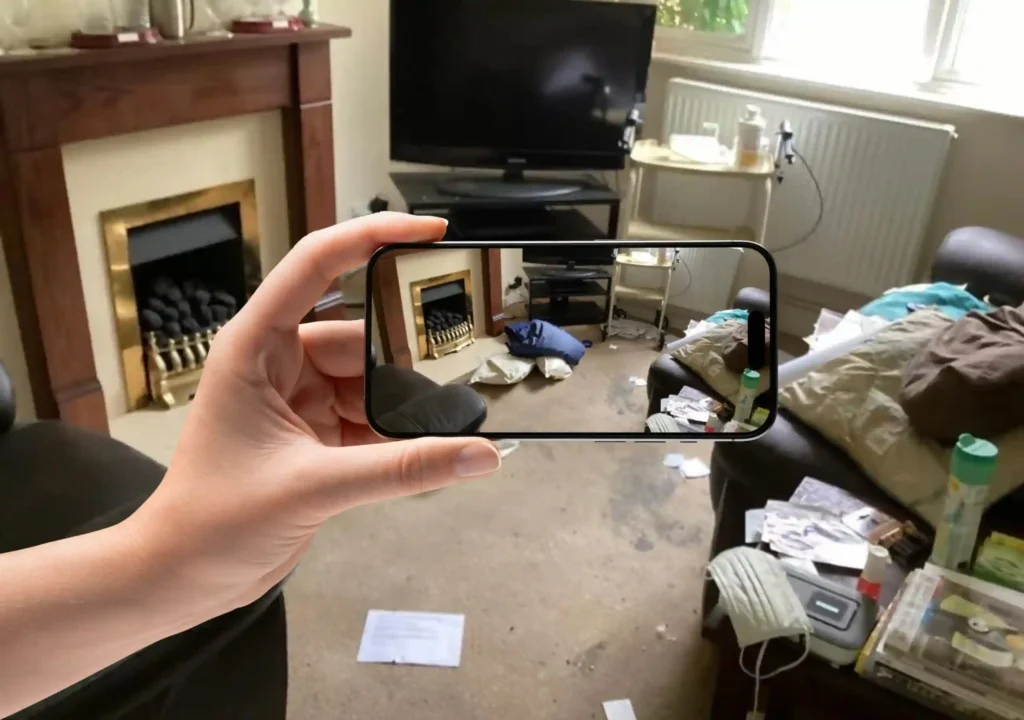
What photos should you send for a house clearance quote?
If you are asking for a quote from photos, the more detail you provide, the better.
As a guide, try to send:
- one photo from each corner of every room being cleared
- photos of cupboards or built-in storage if they need emptying
- photos of lofts, garages, sheds and outbuildings
- photos of garden waste or outdoor items
- close-ups of bulky furniture
- photos of sofas, armchairs, mattresses, fridges and freezers
- photos of paint, chemicals, electrical items, tyres, gas bottles or unusual items
- photos showing stairs, access routes, parking or narrow entrances
- a short note explaining what is staying and what needs to go
It is also helpful to explain whether the property is occupied, vacant, in probate, being sold, rented out or prepared for renovation. This helps the clearance company understand the wider situation and plan the job properly.
A good rule is this: if you are unsure whether something matters, include it in the photos or mention it in your enquiry.
Clear A Space’s contact form already allows customers to upload relevant images so the team can assess a clearance job and provide a more accurate response.
Specialist disposal items that can affect the price
Some items cost more to dispose of because they cannot be treated as standard mixed waste. These items may need to be separated, handled differently or taken to specific disposal or recycling facilities.
Examples can include:
- paint
- sofas
- armchairs
- upholstered seating
- mattresses
- fridge freezers
- electrical items
- fluorescent tubes
- lithium batteries
- tyres
- gas bottles
- chemicals
- some appliances
- some garden or garage waste
This is one of the reasons why two properties of a similar size can have very different clearance costs. One property may contain mostly reusable furniture and household items, while another may include multiple mattresses, fridges, old paint tins, damaged sofas, electrical waste and heavy mixed waste.
Upholstered domestic seating is an important example. Environment Agency guidance says upholstered domestic seating may contain persistent organic pollutants, often referred to as POPs. This can include sofas, sofa beds, armchairs, dining chairs with upholstery, stools, footstools, office chairs, futons, bean bags and cushions where they contain leather, synthetic leather, fabric or foam. These items need to be managed correctly when they become waste.
This is why a reputable clearance company needs to know about these items before quoting. It helps avoid surprises on the day and ensures the waste is handled legally and responsibly.
Why VAT is included in a professional house clearance quote
VAT is another factor that can affect the final price. The standard rate of VAT in the UK is 20% for most goods and services.
It is worth remembering that VAT is not an extra charge added randomly by the clearance company. If a business is VAT registered and the work is subject to VAT, the company is required to charge it and account for it correctly.
Some customers naturally compare a VAT registered professional company with a cheaper cash quote from someone offering to “take it away”. The problem is that the cheapest quote is not always the safest quote.
VAT registration on its own does not prove that a clearance company is licensed to carry waste. However, it can be one sign that you are dealing with an established business. The more important checks are whether the company is properly registered as a waste carrier, provides clear paperwork and can explain where your waste will go.
A professional quote should make clear whether VAT is included, what the total cost is and what services are covered.
Can you carry out a DIY house clearance?
Yes, you can carry out a house clearance yourself.
For smaller decluttering jobs, this may be a practical option. You may be able to take items to a Household Waste Recycling Centre, donate reusable items, sell furniture or hire a skip.
However, for full property clearances, DIY is not always as cheap or simple as it first appears.
Most properties require more work than expected. You may need to sort items, lift heavy furniture, dismantle bulky pieces, arrange transport, book skips, deal with restricted waste and make several journeys to recycling facilities. You may also find that some items cannot go into a standard skip or need separate disposal.
A full clearance can quickly become physically demanding, time-consuming and expensive, especially where multiple skips are needed.
A professional house clearance company deals with the labour, loading, sorting, transport and disposal for you. This can make it a more practical option, particularly for probate clearances, large family homes, rented properties, end-of-tenancy clearances or situations where time is limited.
Skip hire vs professional house clearance
Skip hire can work well for some projects, but it is not always the best solution for a full house clearance.
With a skip, you usually still need to do all the physical work yourself. You have to carry everything out of the property, load the skip safely and make sure restricted items are not placed inside. If one skip is not enough, the cost can increase quickly.
A professional house clearance service is different. The team does the lifting, loading, sorting and removal. They can separate items for reuse, recycling and disposal, and they should understand how different waste streams need to be handled.
This is especially important where a property contains bulky furniture, upholstered seating, white goods, electrical items, old paint, garage waste or items that cannot simply be mixed together.
So while skip hire may look cheaper at first glance, it is worth comparing the full picture:
- how many skips would you need?
- how much labour is involved?
- how much time will it take?
- what items cannot go in the skip?
- how will specialist items be handled?
- who is responsible if the waste is not dealt with correctly?
For many customers, especially on larger clearances, a professional house clearance company can be a more efficient and less stressful option.
How to check a house clearance company is legitimate
This is one of the most important parts of arranging a clearance.
When waste leaves your property, you want to know that it is being handled legally and ethically. Fly-tipping is a serious issue, and using an unlicensed or irresponsible operator can create problems for the customer as well as the environment.
A professional clearance company should be able to show that it is registered to carry waste. Government guidance states that businesses must register as a waste carrier, broker or dealer if they transport, buy, sell, dispose of waste, or arrange for someone else to do so.
You can also use the public register of waste carriers, brokers and dealers to check whether a business is registered. The register is designed to help people find businesses registered to transport, buy, sell or dispose of waste, or arrange waste disposal.
Before booking a clearance, you should ask:
- Are you registered as a waste carrier?
- Can I see your waste carrier registration details?
- Are you insured?
- Where will the waste be taken?
- What happens to reusable items?
- Do you recycle or donate where possible?
- Will I receive an invoice or receipt?
- Is VAT included in the quote?
- Are there any items that may cost extra?
A genuine company will not be offended by these questions. In fact, a reputable clearance company should welcome them.
Clear A Space is fully insured and registered as a waste carrier, and also highlights its focus on recycling, rehoming, or donating over 90% of clearances.
What paperwork should you ask for?
The paperwork you need can depend on whether the clearance is domestic or commercial.
For household clearances, you should ask for clear evidence that the company is legitimate. This could include:
- the company name and contact details
- waste carrier registration details
- an invoice or receipt
- confirmation of what has been cleared
- confirmation of where the waste is being taken, where appropriate
As explained on the government website, the household waste duty of care guidance states that householders should be given the opportunity to show they took reasonable steps if their waste later ends up fly-tipped or in the hands of an unauthorised carrier. Evidence can help demonstrate that you took care when choosing who removed your waste.
For business or commercial waste, waste transfer notes are especially important. It also states that for each load of non-hazardous waste moved off business premises, you need a waste transfer note or another document containing the same information, such as an invoice.
In simple terms: always make sure there is a clear paper trail.
Getting a fixed house clearance quote in Norfolk
If you are arranging a house clearance in Norfolk, local knowledge can make the quoting process smoother.
Properties across Norfolk can vary widely. A clearance in a Norwich terrace, a rural cottage, a large family home near Wymondham, a property in Thetford, Dereham, Attleborough, King’s Lynn or Great Yarmouth can all present different access, parking and logistical considerations.
Some properties have driveways and easy loading access. Others may involve narrow lanes, flats, staircases, restricted parking, shared access, outbuildings, barns, lofts or garden areas.
That is why detailed photos or a viewing can make such a difference. The more accurate the information at the start, the easier it is to provide a clear quote with no hidden surprises.
At Clear A Space, our process is designed to make this as straightforward as possible. Tell us what needs clearing, send photos where possible, and we will advise whether a quote can be provided from the information supplied or whether a property viewing would be best.
What should be included in a good house clearance quote?
A good house clearance quote should be clear, detailed and easy to understand.
Ideally, it should explain:
- what areas of the property are included
- what items are being removed
- whether labour is included
- whether loading and transport are included
- whether recycling and disposal are included
- whether specialist disposal items are included
- whether VAT is included
- whether a deep clean is included or quoted separately
- whether any items are excluded
- whether the quote is fixed or estimated
This helps you compare quotes properly. A cheap quote that does not include VAT, specialist disposal, sufficient labour or proper waste handling may not be as good as it first appears.
The best quote is not always the cheapest. It is the one that is clear, realistic and backed by a professional, licensed and responsible service.
What it all means
A house clearance quote is about much more than simply counting how many rooms need clearing.
A professional quote takes into account labour, time, volume, weight, access, recycling, disposal, specialist items and VAT. It also reflects the responsibility involved in handling waste legally and ethically.
If you are planning a house clearance, the best thing you can do is provide as much information as possible from the start. Send clear photos, explain which areas need clearing, point out any bulky or unusual items and ask the company how your waste will be handled.
That way, you can receive a more accurate quote, avoid unexpected costs and feel confident that your clearance is being carried out properly.
Need a house clearance quote in Norfolk or the East of England?
Contact Clear A Space today, send us a few details and upload your photos. Our team will review the information and provide clear advice on the next steps.
House Clearance Quote FAQs
How do house clearance companies calculate a quote?
House clearance companies usually calculate a quote based on the size of the property, the volume of items, estimated waste weight, access, labour required, time on site, specialist disposal items and VAT. Larger or more complex clearances may need a property viewing before a fixed quote can be confirmed.
Can I get a house clearance quote from photos?
Yes, in many cases you can get a house clearance quote from photos, especially for smaller or straightforward clearances. For larger clearances, or where access and specialist items need checking, a property viewing may be recommended.
What photos should I send for a house clearance quote?
Send clear photos of every room and area being cleared, including lofts, garages, sheds, gardens and outbuildings. It also helps to include close-ups of bulky furniture, sofas, mattresses, fridges, paint, chemicals, electrical items and any restricted or unusual waste.
Why do sofas and armchairs cost more to dispose of?
Sofas, armchairs and other upholstered seating may need special handling because some upholstered domestic seating can contain persistent organic pollutants, known as POPs. These items cannot always be treated as standard mixed waste and may need to be separated and managed correctly.
Is VAT included in a house clearance quote?
A professional quote should clearly state whether VAT is included. The standard rate of VAT in the UK is 20% for most goods and services, so if a clearance company is VAT registered and the work is subject to VAT, this should be shown clearly in the quote.
Is it cheaper to hire a skip or use a house clearance company?
Skip hire can be cheaper for some small jobs, but it is not always the best option for a full house clearance. You still need to do the labour yourself, some items may not be accepted in a skip, and multiple skips may be needed. A professional clearance company handles the labour, loading, sorting, transport and responsible disposal.
How do I check if a house clearance company is licensed?
Ask to see the company’s waste carrier registration details and check them against the public register of waste carriers, brokers and dealers. A legitimate company should be happy to provide this information.
What paperwork should I receive after a house clearance?
For a household clearance, ask for an invoice or receipt, company details and waste carrier registration information. For commercial clearances, a waste transfer note or equivalent document is usually required for each load of non-hazardous waste moved off the premises.